What I Discovered From Wearing a Glucose Monitor for 4 Weeks
As a health coach, I’m fascinated by the things that influence our health behind the scenes — the everyday habits that can affect each of us differently.
After all, no two bodies respond in exactly the same way. So recently I decided to wear a continuous glucose monitor (CGM) for four weeks.
I wasn’t diabetic.
I wasn’t trying to obsess over numbers.
I simply wanted to understand how food, sleep, stress and everyday life were affecting my body.
What I discovered surprised me.
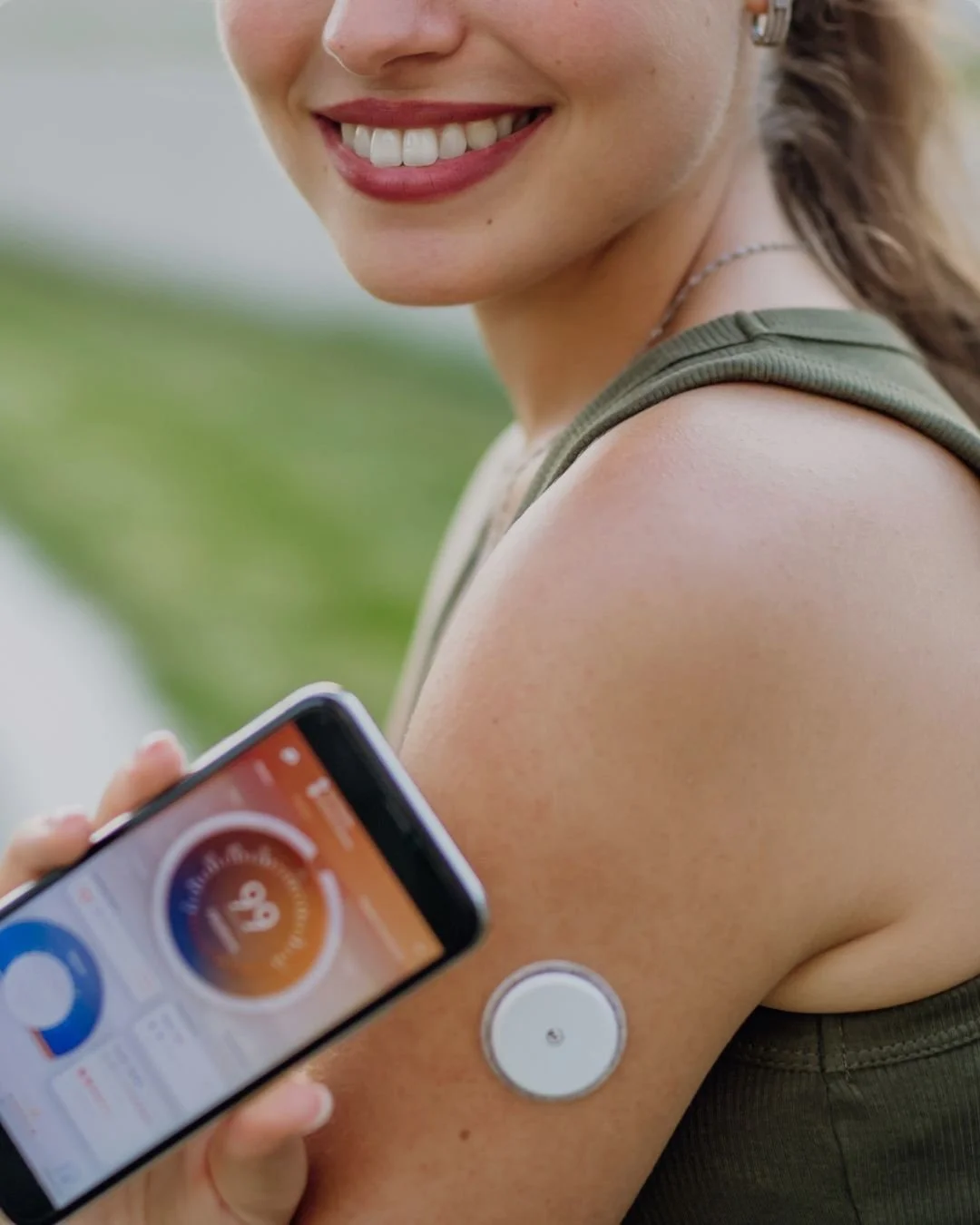
First Things First -
What Is A Glucose Monitor?
A Continuous Glucose Monitor (CGM) is a small sensor worn on the body that tracks glucose levels throughout the day and night.
Rather than giving a single snapshot, it shows how your body responds in real time to:
Food
Exercise
Sleep
Stress
Illness
Hormonal changes
Alcohol
It’s like having a window into how your body is responding beneath the surface.
Lesson 1: Stress Affected My Blood Sugar More Than I Expected
Like many people, I assumed food would be the biggest factor when it came to my glucose levels.
I was wrong.
One of the biggest surprises was how stress appeared to influence my readings.
As a post-menopausal single mum to a beautiful teenager with ADHD, life can be busy. Alongside raising my daughter, I run my own businesses and like many women, my stress levels can ebb and flow even when I feel I’m doing all the “right” things to manage them.
What surprised me was that on busier, more stressful days, my glucose often ran higher despite eating very similar meals.
It was a powerful reminder that health isn’t just about what we eat.
Our nervous system, our thoughts, our emotions and the pressures of everyday life all play a role in how our bodies function.
Sometimes the things affecting our health most aren’t sitting on our plate at all.
Lesson 2: I Was Accidentally Under-Fuelling My Body?
One of the biggest surprises was that my glucose didn’t spike very often at all.
In fact, over the four weeks, I noticed the opposite. My glucose was far more likely to dip lower than expected than it was to rise dramatically.
This made me take a closer look at my eating habits.
Like many busy women, I don’t always feel hungry. Between running my businesses, being a mum and juggling everyday life, it’s easy to delay meals or simply forget to eat enough.
What the glucose monitor showed me was that my body wasn’t necessarily thriving on that approach.
The dips suggested that I wasn’t consistently giving my body enough fuel throughout the day. It made me realise that even when I don’t feel particularly hungry, my body still needs regular nourishment.
Since then, I’ve become much more mindful of eating balanced meals that include protein, healthy fats and fibre, even if it’s something small.
Lesson 3: What Alcohol Taught Me About My Blood Sugar
Another interesting pattern appeared after the occasional couple of glasses of wine.
I noticed my glucose dropped lower overnight after drinking alcohol.
As a health coach, I already know alcohol isn’t particularly beneficial for my health but seeing how it affected my own body in real time was eye-opening.
It shifted my perspective.
Rather than viewing wine as a normal part of winding down on a Saturday evening with friends, I now see it as an occasional treat to be enjoyed consciously and very much in moderation.
Seeing the data helped me understand not just how alcohol affects people in general, but how it affects me personally.
Once again, it reinforced one of the biggest lessons from this experience: our bodies are unique, and understanding how your body responds can be incredibly empowering.
Lesson 4: Movement Really Works
I genuinely do enjoy an evening walk, but through this experiment it highlighted the power of movement.
Even a short 20 minute walk after eating appeared to help keep my readings steadier.
This was encouraging because it showed that health doesn’t always require extreme solutions.
Sometimes simple enjoyable habits can make a meaningful difference.
The Biggest Lesson I Learned
If there’s one thing this experience taught me, it’s that our bodies are wonderfully unique.
I started this experiment expecting to learn more about food.
Instead, I learned about stress, sleep, nourishment, alcohol and the importance of paying attention to the signals my body was giving me.
What surprised me most was how different my results were from some of the stories I’d heard from others.
My glucose didn’t spike dramatically very often. In fact, it was the dips that taught me the biggest lessons.
It reminded me that health is never one-size-fits-all.
What works brilliantly for one person may not work in exactly the same way for another.
The same food, the same lifestyle habits and even the same stress levels can affect people differently.
That’s why I’m such a strong believer in becoming curious about your own body rather than blindly following health trends.
The more we understand our own patterns, the more empowered we become to make choices that genuinely support our wellbeing.
For me, that meant eating more consistently, paying greater attention to stress and rethinking my relationship with alcohol.
For someone else, the lessons may be completely different.
And that’s the beauty of it.
Health isn’t about perfection.
It’s about learning to work with your body rather than against it.
Have you ever tracked something about your health that completely changed your perspective?
I’d love to hear your experience.
And if you’re feeling stuck with your energy, weight, digestion or overall wellbeing, you’re welcome to book a free discovery call to explore how we can work together.
Wondering how balanced your blood sugar is?
Take my FREE 2-minute Blood Sugar Balance Quiz?
You’ll receive:
✅ Your personalised blood sugar score
✅ A tailored guide based on your results
✅ Simple steps to help you feel more energised and in control